Yahoo!
Sports
‘22-’23


Context
At Yahoo! Fantasy, I crafted a
win/loss
module that helped players better understand
their performance and how to
improve
their teams

Through polished
visuals and
interaction design,
I
transformed a
forgettable
moment into one worth
celebrating
Role
Product Designer II
Results
+$5 million
over annual expected revenue
+11.0%
increase in user activity

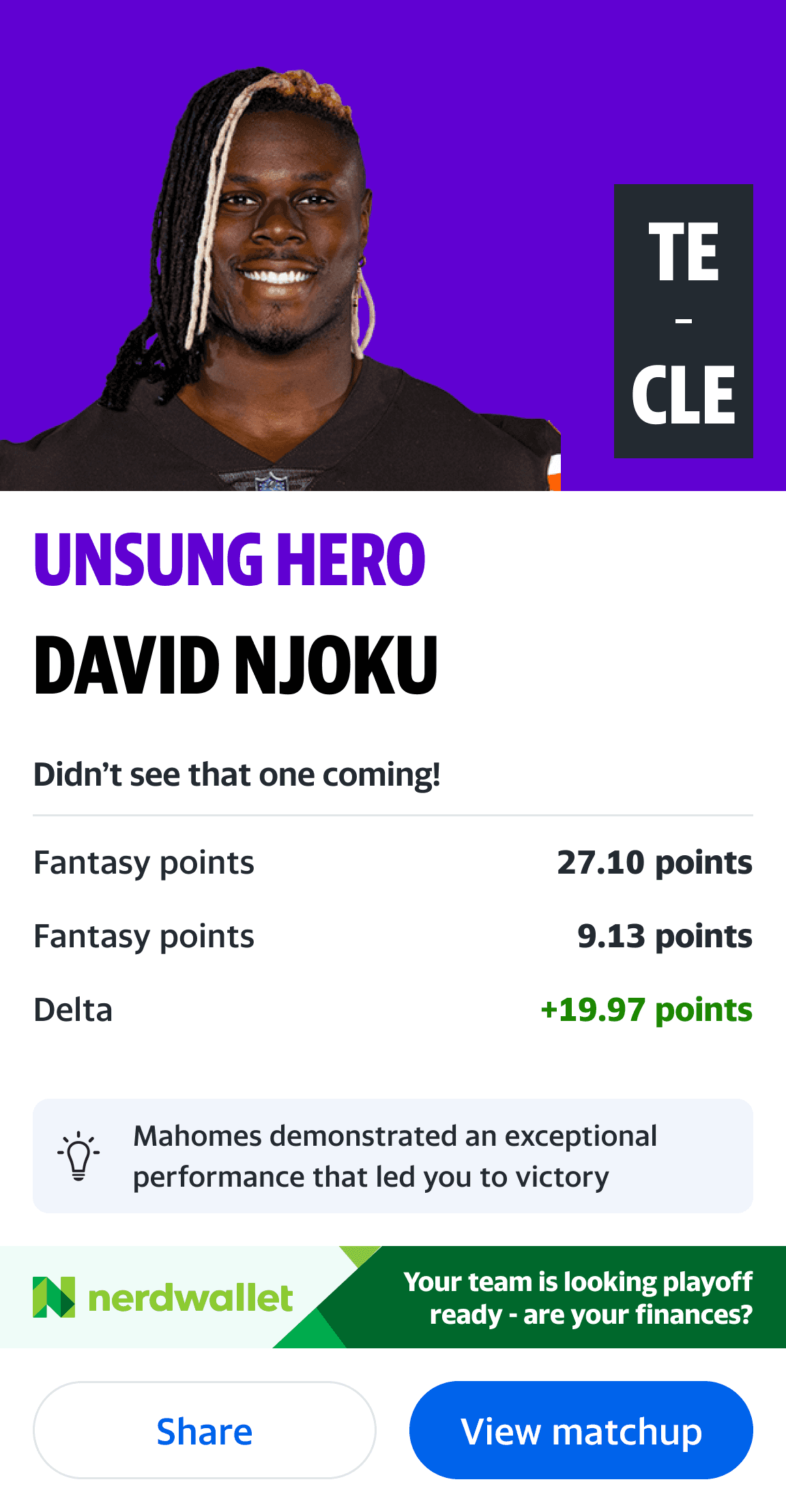
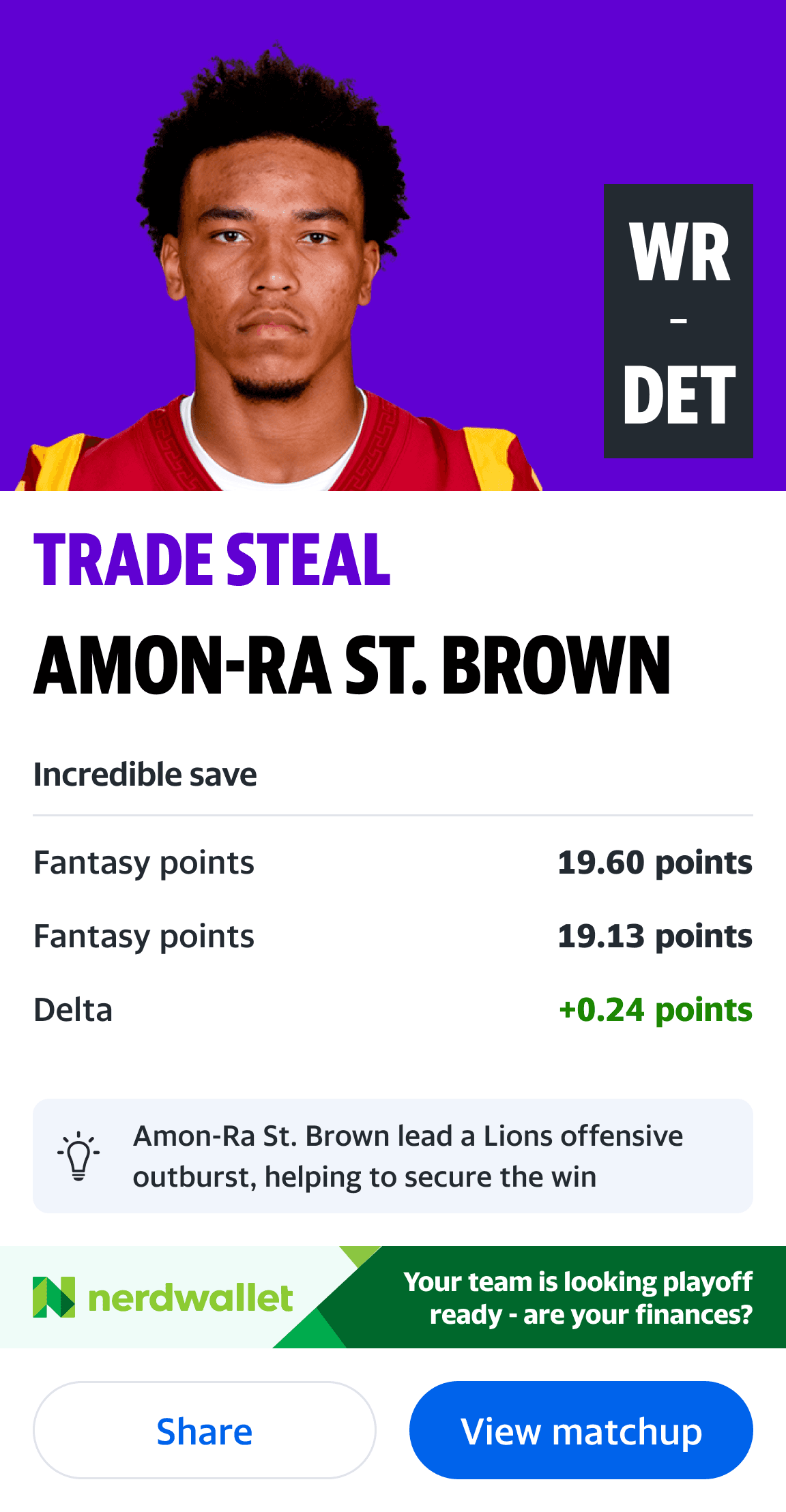
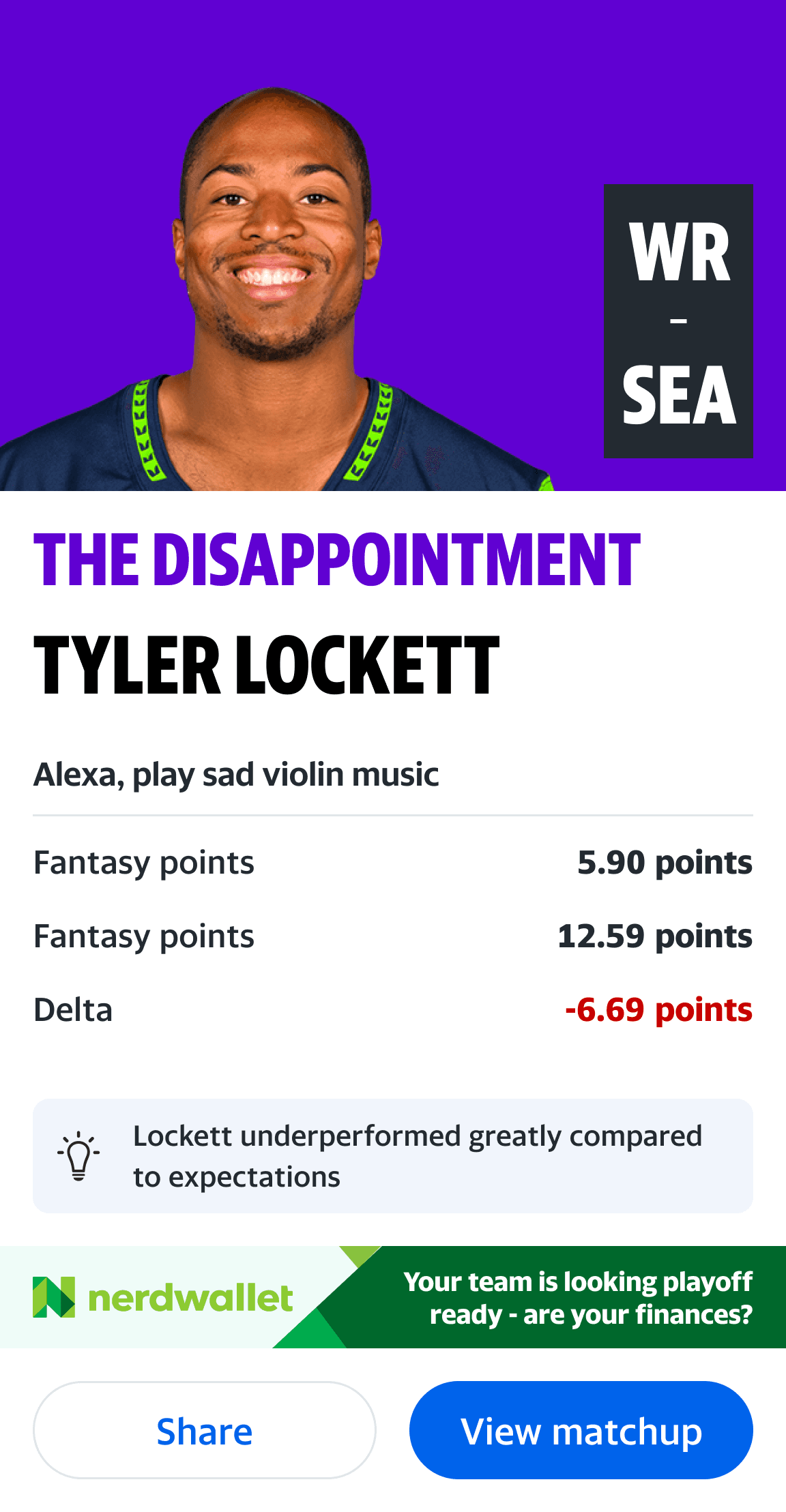
Designing a win/loss module that drives user engagement
Step 1
Observe the field
Public Yahoo Fantasy leagues churned within weeks, while private leagues stayed active all season — pointing to a clear opportunity to re-engage public league users
Public league activity
Start week
End week
Private league activity
Start week
End week
Step 2
What's driving the play
What are some advantages private leagues have over public leagues? How might I find opportunities to bring over these features into public fantasy leagues?
Social Accountability
Users are more active when they know who they're competing against. Private leagues were made up of people who already knew each other outside the app. Often times, public leagues weren't.
Personalized experiences
Private leagues allow settings to be customized to suit players' needs — which can be especially helpful for newer players still learning the game. Public leagues don't offer this same flexibility
The problem
New fantasy players face steep
learning
curves and find themselves unable to fully
dedicate the time
necessary to be successful
in their leagues
Crafting a new game plan
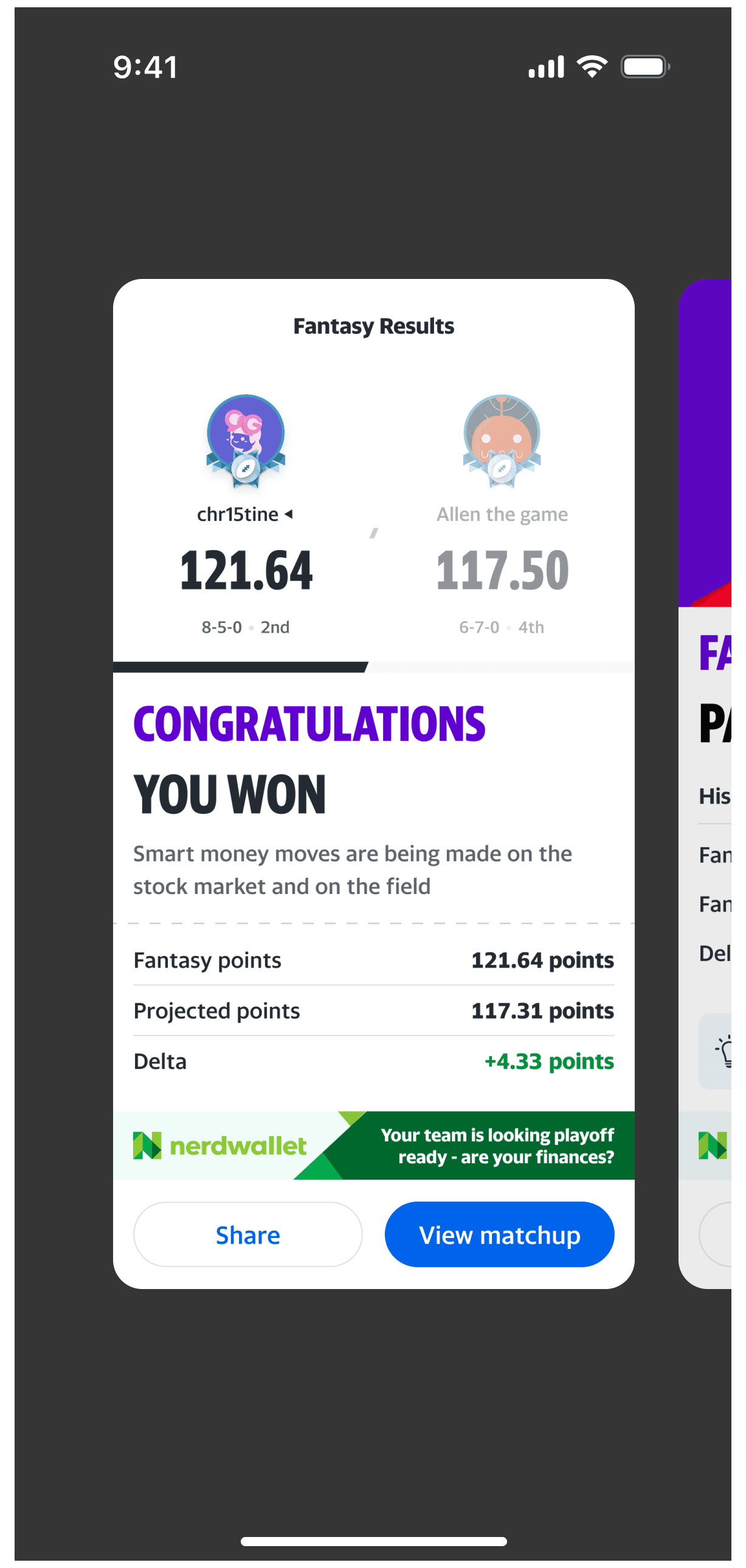
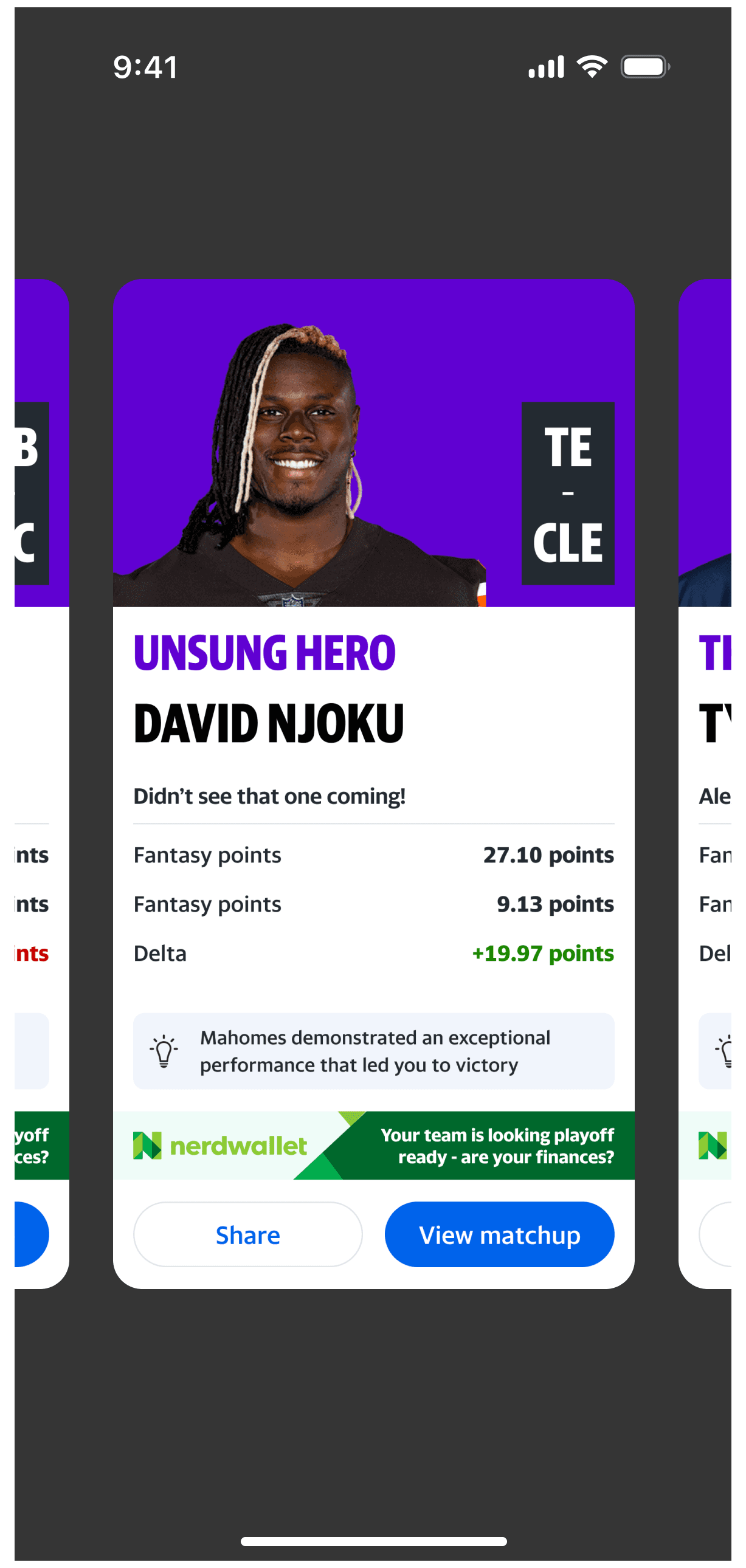
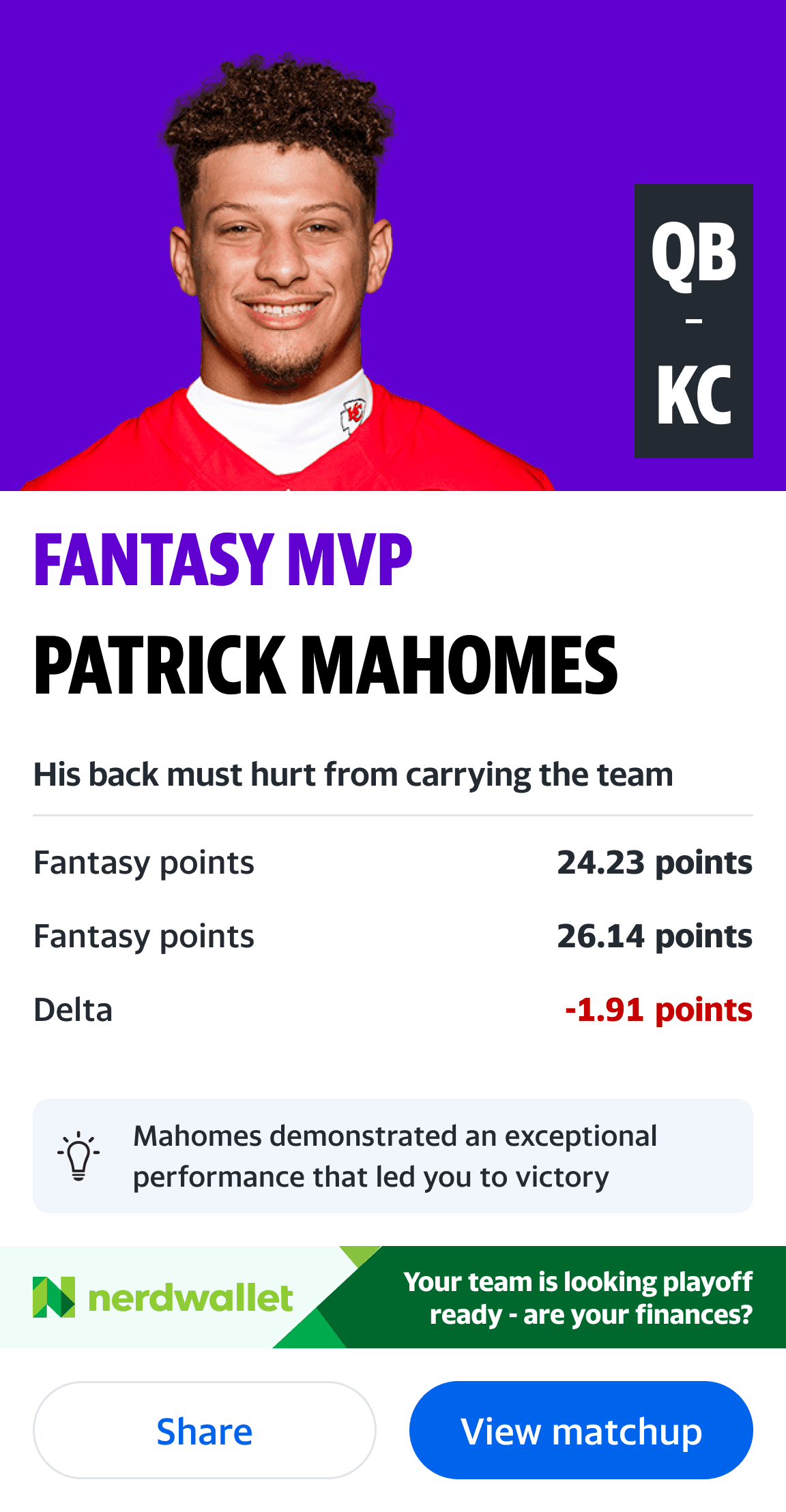
Instead of just telling users whether they won or lost, I wanted to show who and what drove that result to illustrate a clearer sense of how to improve a fantasy team
Check league
Player updates
New
Matchup results
Point breakdown
New
Win/loss
Update team
Exit
Step 3
Break down the box score
Since fantasy sports success depends entirely on player performance, understanding how each player on one's team scores throughout the season is critical. This insight guided my exploration into surfacing that information
Fantasy points
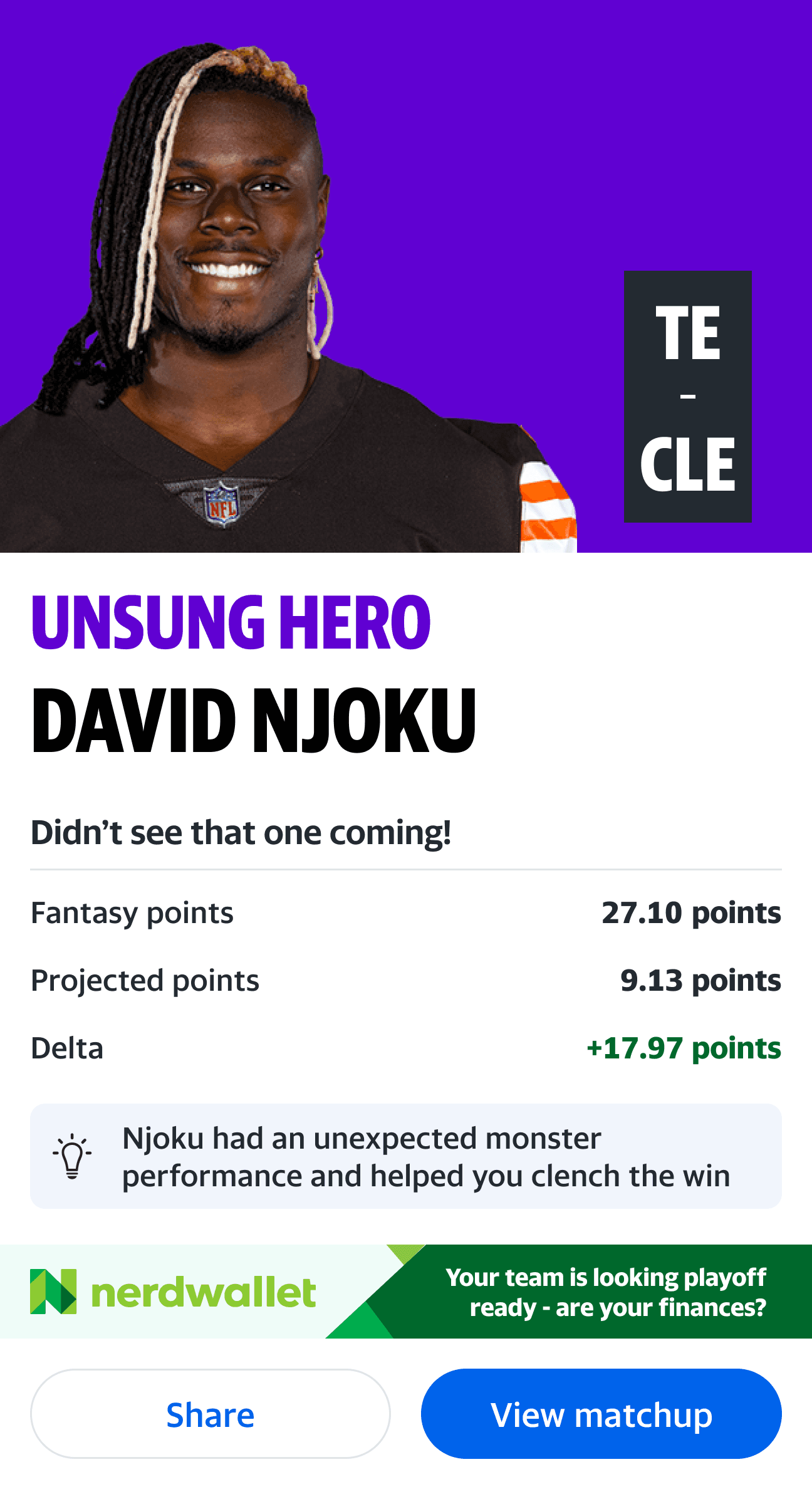
Provide context to players over or under performing
Can be implemented across all fantasy sports
Player statistics
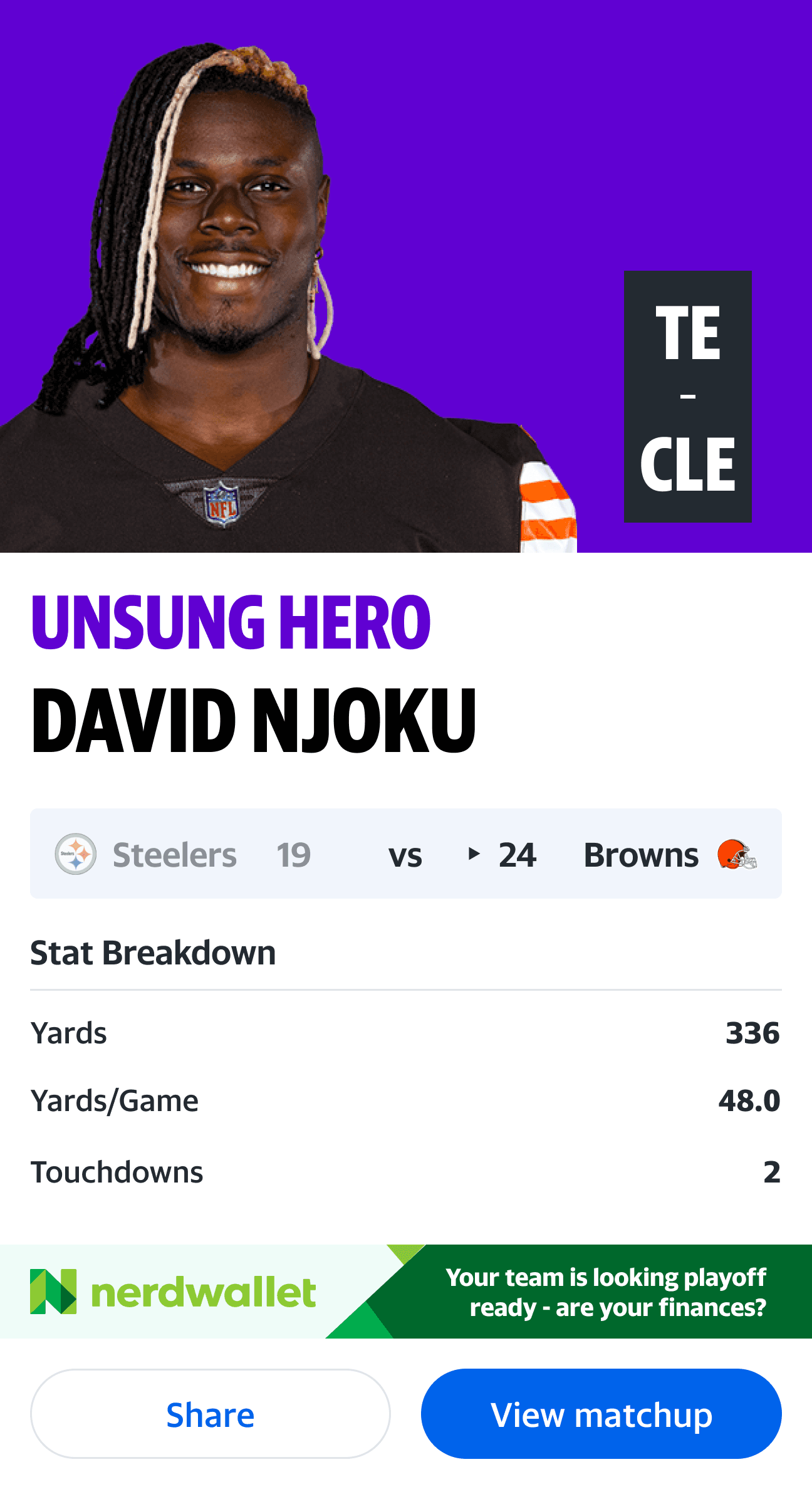
Gives context to how points are calculated in each game
Custom code needed for different sport types
Player news
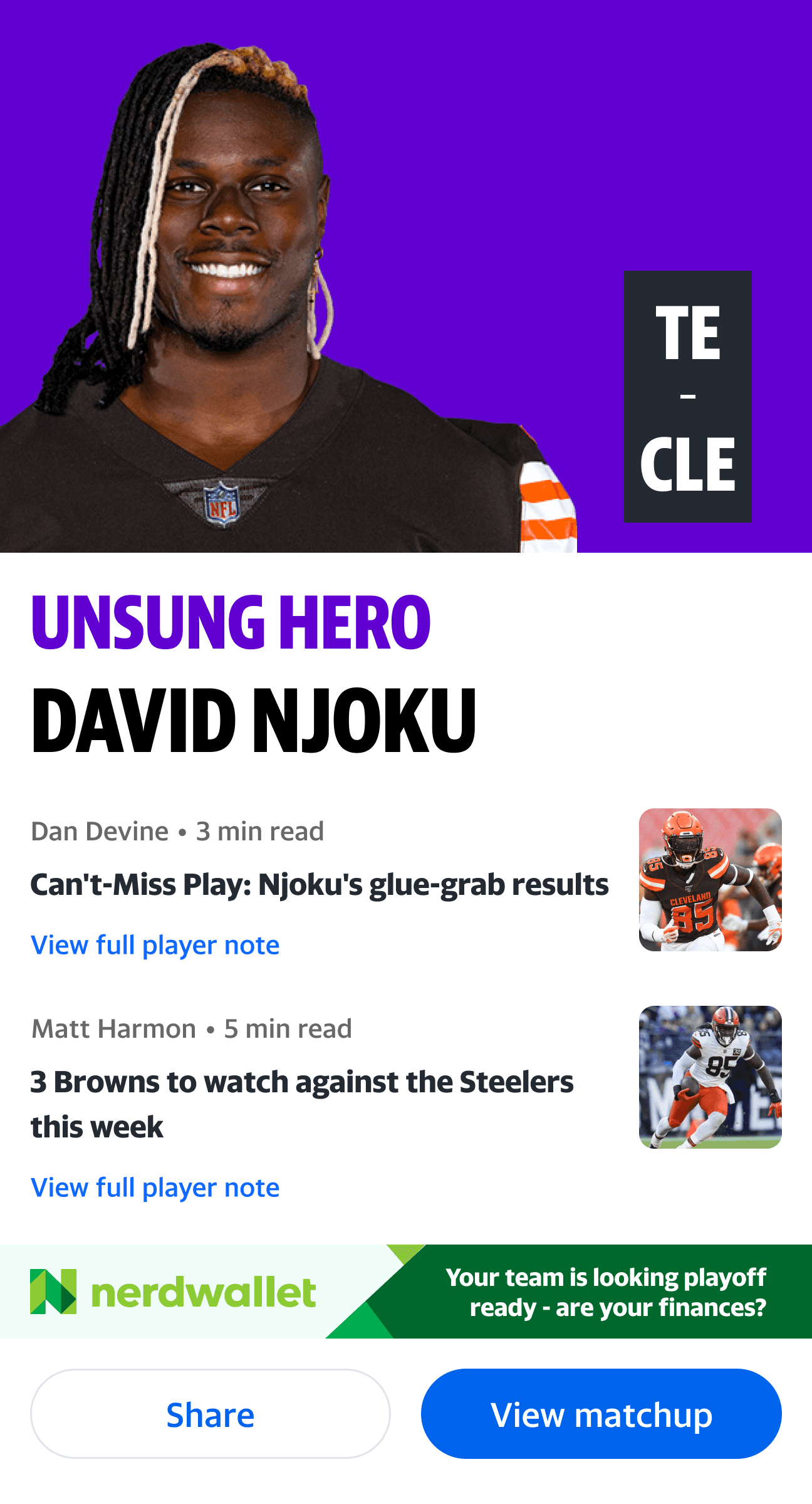
Gives more context to overall player performance
Redirects users away from the Yahoo Fantasy app
Step 4
Center Stage
Once the player cards were designed, I needed a compelling way to showcase them so I used interaction design to bring those narratives to life
Card swipes
Opportunity to share more matchup info to users
Not enough data for what info users want surfaced
Card stack
Allows users to easily shuffle and go back to cards
Interaction is not common. Users might be confused
Envelope expansion
Feels more personal and users can easily view cards
High level of effort for eng. to build the envelope
Step 5
Level up the plays
Crafting a module that balanced function and form. It was critical that the information shared was compelling and accessible
Horizontal scroll
Easy access to more cards. Conventional interactions
Gives cards room to scale up in information
Center expansion
Allows for more cards and conventional interaction
Matchup results should be first and top/left, not center
Vertical scroll
Easy access to more cards. Conventional interactions
Difficult to increase information space on cards
Give it some game-day flair
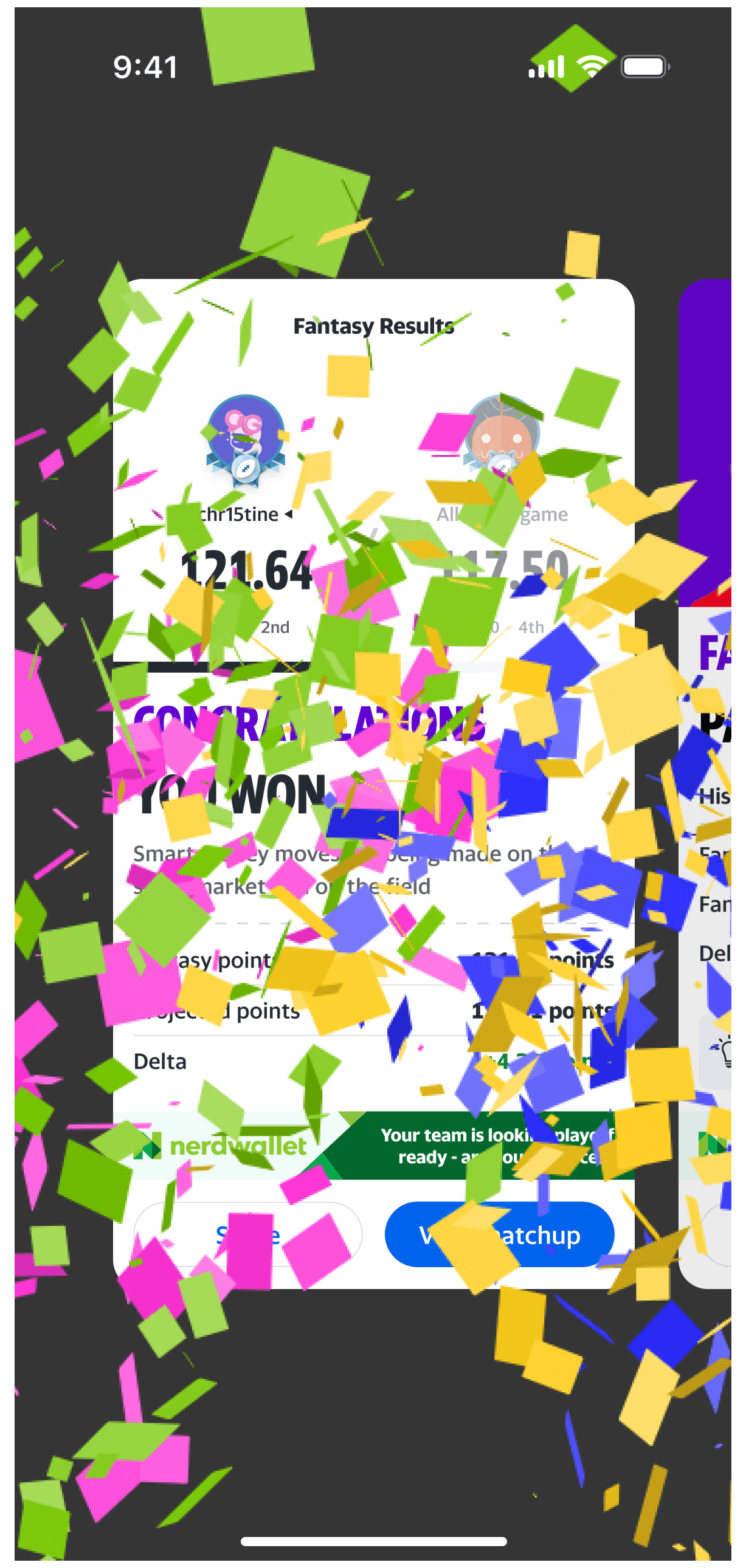
The team wanted confetti to empahsize the celebratory effect. They asked; I delivered.
Step 6
Close out strong
I partnered with sales to explore new revenue tiers. Custom confetti—featuring brand colors and logos—quickly became a popular, more premium option
Tier 3
Bronze Tier
Generic confetti
Custom GAM banner
Tier 2
Silver Tier
Custom confetti with colors
Custom GAM banner
Tier 1
Gold Tier
Custom confetti with colors and logo
Custom GAM banner
What difference was made?
+$5 million
over expected revenue
Generated revenue on par with Yahoo!’s standout 2019 performance
+20%
increase in user activity
Higher sustained engagement from users in their fantasy leagues
Yahoo!
Sports
‘22-’23
Context
At Yahoo! Fantasy, I crafted a
win/loss
module that helped players better understand
their performance and how to
improve
their teams
Through polished
visuals and
interaction design,
I
transformed a
forgettable
moment into one worth
celebrating
Role
Product Designer II
Results
+$5 million
over annual expected revenue
+11.0%
increase in user activity
Designing a win/loss module that drives user engagement
Step 1
Observe the field
Public Yahoo Fantasy leagues churned within weeks, while private leagues stayed active all season — pointing to a clear opportunity to re-engage public league users
Public league activity
Start week
End week
Private league activity
Start week
End week
Step 2
What's driving the play
What are some advantages private leagues have over public leagues? How might I find opportunities to bring over these features into public fantasy leagues?
Social Accountability
Users are more active when they know who they're competing against. Private leagues were made up of people who already knew each other outside the app. Often times, public leagues weren't.
Personalized experiences
Private leagues allow settings to be customized to suit players' needs — which can be especially helpful for newer players still learning the game. Public leagues don't offer this same flexibility
The problem
New fantasy players face steep
learning
curves and find themselves unable to fully
dedicate the time
necessary to be successful
in their leagues
Crafting a new game plan
Instead of just telling users whether they won or lost, I wanted to show who and what drove that result to illustrate a clearer sense of how to improve a fantasy team
Check league
Player updates
New
Matchup results
Point breakdown
New
Win/Loss
Update team
Exit
Step 3
Break down the box score
Since fantasy sports success depends entirely on player performance, understanding how each player on one's team scores throughout the season is critical. This insight guided my exploration into surfacing that information
Fantasy points
Provide context to players over or under performing
Can be implemented across all fantasy sports
Player statistics
Gives context to how points are calculated in each game
Custom code needed for different sport types
Player news
Gives more context to overall player performance
Redirects users away from the Yahoo Fantasy app
Step 4
Center Stage
Once the player cards were designed, I needed a compelling way to showcase them so I used interaction design to bring those narratives to life
Card swipes
Opportunity to share more matchup info to users
Not enough data for what info users want surfaced
Card stack
Allows users to easily shuffle and go back to cards
Interaction is not common. Users might be confused
Envelope expansion
Feels more personal and users can easily view cards
High level of effort for eng. to build the envelope
Step 5
Level up the plays
Crafting a module that balanced function and form. It was critical that the information shared was compelling and accessible
Horizontal scroll
Easy access to more cards. Conventional interactions
Gives cards room to scale up in information
Center expansion
Allows for more cards and conventional interaction
Matchup results should be first and top/left, not center
Vertical scroll
Easy access to more cards. Conventional interactions
Difficult to increase information space on cards
Give it some game-day flair
The team wanted confetti to empahsize the celebratory effect. They asked; I delivered.
Step 6
Close out strong
I partnered with sales to explore new revenue tiers. Custom confetti—featuring brand colors and logos—quickly became a popular, more premium option
Tier 3
Bronze Tier
Generic confetti
Custom GAM banner
Tier 2
Silver Tier
Custom confetti with colors
Custom GAM banner
Tier 1
Gold Tier
Custom confetti with colors and logo
Custom GAM banner
What difference was made?
+$5 million
over expected revenue
Generated revenue on par with Yahoo!’s standout 2019 performance
+20%
increase in user activity
Higher sustained engagement from users in their fantasy leagues
Yahoo!
Sports
‘22-’23
Context
At Yahoo! Fantasy, I crafted a
win/loss module that helped
players better understand
performance and how to
improve
their teams
Through polished
visuals and
interaction design,
I
transformed a
forgettable
moment into one worth
celebrating
Role
Product Designer II
Results
+$5m
over expected revenue
+11.0%
increase in user activity
Designing a win/loss module that drives user engagement
Step 1
Observe the field
Public Yahoo Fantasy leagues churned within weeks, while private leagues stayed active all season — pointing to a clear opportunity to re-engage public league users
Public league activity
Start week
End week
Private league activity
Start week
End week
Step 2
What's driving the play
What are some advantages private leagues have over public leagues? How might I find opportunities to bring over these features into public fantasy leagues?
Social Accountability
Users are more active when they know who they're competing against. Private leagues were made up of people who already knew each other outside the app. Often times, public leagues weren't.
Personalized experiences
Private leagues allow settings to be customized to suit players' needs — which can be especially helpful for newer players still learning the game. Public leagues don't offer this same flexibility
The problem
New fantasy players face steep
curves and find
learning
dedicate the time
necessary
to be successful in their league
themselves unable to fully
Crafting a new game plan
Instead of just telling users whether they won or lost, I wanted to show who and what drove that result to illustrate a clearer sense of how to improve a fantasy team
Check league
Player updates
New
Matchup results
Point breakdown
New
Win/Loss
Update team
Exit
Step 3
Break down the box score
Since fantasy sports success depends entirely on player performance, understanding how each player on one's team scores throughout the season is critical. This insight guided my exploration into surfacing that information
Fantasy points
Provide context to players over or under performing
Can be implemented across all fantasy sports
Player statistics
Gives context to how points are calculated in each game
Custom code needed for different sport types
Player news
Gives more context to overall player performance
Redirects users away from the Yahoo Fantasy app
Step 4
Center Stage
Once the player cards were designed, I needed a compelling way to showcase them so I used interaction design to bring those narratives to life
Card swipes
Opportunity to share more matchup info to users
Not enough data for what info users want surfaced
Card stack
Allows users to easily shuffle and go back to cards
Interaction is not common. Users might be confused
Envelope expansion
Feels more personal and users can easily view cards
High level of effort for eng. to build the envelope
Step 5
Level up the plays
Crafting a module that balanced function and form. It was critical that the information shared was compelling and accessible
Horizontal scroll
Easy access to more cards. Conventional interactions
Gives cards room to scale up in information
Center expansion
Allows for more cards and conventional interaction
Matchup results should be first and top/left, not center
Vertical scroll
Easy access to more cards. Conventional interactions
Difficult to increase information space on cards
Give it some game-day flair
The team wanted confetti to empahsize the celebratory effect. They asked; I delivered.
Step 6
Close out strong
I partnered with sales to explore new revenue tiers. Custom confetti—featuring brand colors and logos—quickly became a popular, more premium option
Tier 3
Bronze Tier
Generic confetti
Custom GAM banner
Tier 2
Silver Tier
Custom confetti with colors
Custom GAM banner
Tier 1
Gold Tier
Custom confetti with colors and logo
Custom GAM banner
What difference was made?
+$5 million
over expected revenue
Generated revenue on par with Yahoo!’s standout 2019 performance
+20%
increase in user activity
Higher sustained engagement from users in their fantasy leagues